
Simone Weil in France runs from a comfortable Paris childhood through provincial classrooms and factory floors to the war years in Marseille and her departure into exile. This guide follows each stage of that French story.
Each section below summarises a period of her life and points to a detailed page on it. The aim is a clear map of where she lived, what she did there and how France later received her writing.
A Parisian childhood and schooling
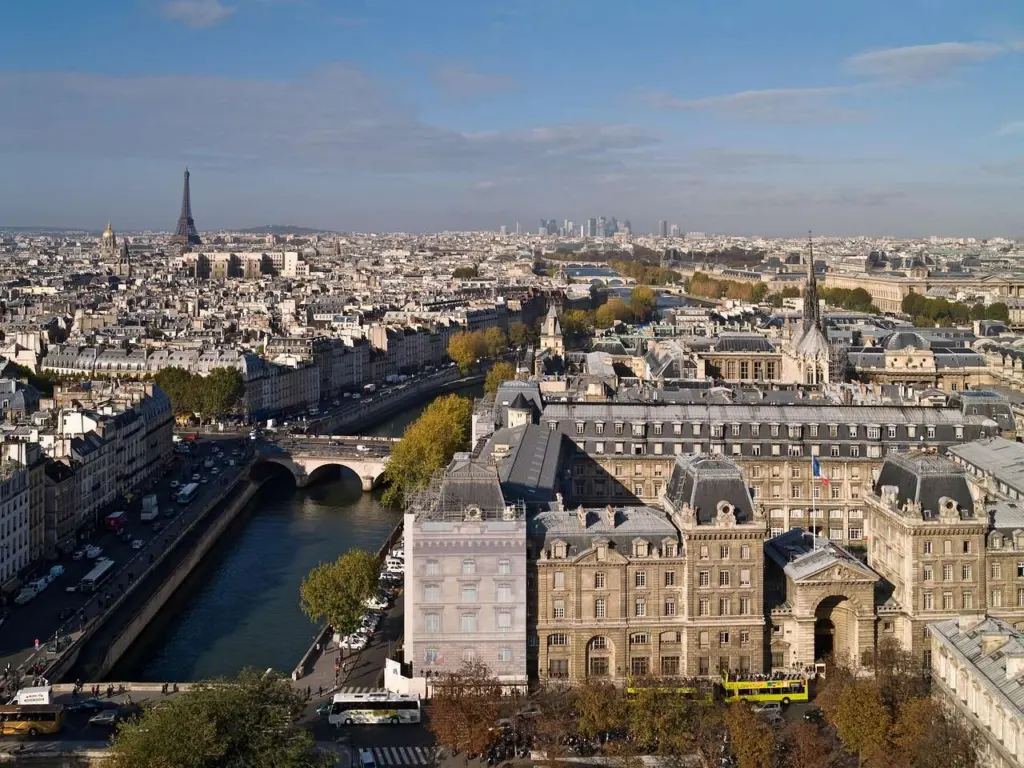
According to the Stanford Encyclopedia of Philosophy, Simone Weil was born in Paris on 3 February 1909. Her parents both came from Jewish families and gave her an assimilated, secular, bourgeois French childhood that was cultured and comfortable. Her older brother André became a distinguished mathematician, and both children attended prestigious Parisian schools.
The same entry names her first philosophy teacher, René Le Senne at the Lycée Victor-Duruy, and says he introduced her to the thesis that contradiction can be a spur to careful, alert thinking. The Internet Encyclopedia of Philosophy adds that she was intellectually precocious and morally sensitive from the start, and that her moral concern showed itself in small refusals of luxury as a child. The page on simone weil early life covers the family, the schools and the Paris setting in more detail.
Lycée Henri-IV, Alain and the École Normale
The Stanford Encyclopedia says that beginning in October 1925 Weil studied at Henri IV Lycée to prepare for the entrance exams of the École Normale Supérieure. There she studied under the philosopher and essayist Émile-Auguste Chartier, known by the pen name Alain. The entry notes that his teaching stressed the history of ideas, with readings from Plato, Descartes, Spinoza and Kant in philosophy and from Homer and the Greek tragedians in literature. In the same entry she is described as part of an Alain and Lagneau line of voluntarist, spiritualist French philosophy, a reading that scholars present as arguable rather than settled.
The relationship between the teacher and the student has its own page. The article on simone weil and alain looks at what Alain taught, how he taught it and what Weil took from his classroom.
On entrance to the school, the Stanford entry reports that in 1928 Weil began her studies at the École Normale and that she was the only woman in her class, the first woman having been admitted in 1917. The Internet Encyclopedia of Philosophy records that she gained admission at her second attempt and that she placed ahead of Simone de Beauvoir in the examination in general philosophy and logic. It gives her thesis title as Science et perfection dans Descartes, a study of the philosopher whose first-person starting point she admired.
These two encyclopedia entries sometimes summarise details differently, which is common for a life told in compressed form. Where they differ, this guide follows the wording of the source it cites and avoids deciding between them.
- Factory year around 24 weeks: 24 weeks
- Writings in 20 volumes produced in 15 years: 20 volumes; 15 years
- Wrote in London for four months: four months
- Coroner ruled three days later: three days
Teaching in the provinces and the factory year
After her studies Weil entered teaching, which in France meant being sent to a lycée wherever a post was open. The Stanford Encyclopedia says that with her agrégation diploma she served from late 1931 to mid-1934 as a teacher at lycées. The Internet Encyclopedia of Philosophy places her at a girls’ secondary school in the regional centre of Le Puy, where it says she taught until 1936, with many breaks for union activities and other commitments. The two summaries cover the span differently, and the page on a simone weil teacher sets out the posts and what is known of her classroom.
Outside school the Stanford entry says that she taught philosophy to workers’ groups, lobbied and wrote on their behalf, and at times joined in manual labour herself. In the provinces she was therefore both a schoolteacher and an activist, a pairing that made her an unusual figure in a girls’ school.
The factory year followed. According to the Stanford Encyclopedia, on 20 June 1934 Weil applied for a sabbatical from teaching so that she could work in Parisian factories among unskilled women labourers. The entry adds that her “year of factory work” amounted in practice to around 24 weeks of labouring, and that it mattered both for her political philosophy and as a turning point in her slow religious evolution. It describes her experience as one of humiliation more than of physical suffering, and it notes that she moved in her vocabulary from oppression toward humiliation and affliction. The page on simone weil factory work gives the full account.
The factory experience also changed how she wrote about labour. Her early essays treated work mainly in terms of power and oppression, and the Stanford entry says that her later writing treats labour as the spiritual core of a well-ordered social life. Readers who want that development in detail will find it in the philosophy material rather than in this biographical guide.
Politics, Solesmes and the road to war
Weil’s French years between the factory and the war were crowded. The Stanford Encyclopedia says that in early August 1932 she travelled to Germany to understand better the conditions fostering Nazism, and that she reported to friends on her return that German trade unions were fully reformist. It adds that she took part in the 1936 Paris factory occupations and planned to return to factory work, but that her course changed with the Spanish Civil War, in which she joined an international anarchist brigade. In late 1936 she wrote against French colonisation of Indochina, and by early 1937 she argued against French claims to Morocco and Tunisia.
The Stanford entry also places a religious turning point in France. During the week of Easter 1938, it says, Weil visited the Benedictine abbey of Solesmes from Palm Sunday to the following Tuesday. Suffering from headaches, she found a joy in Gregorian chant so pure that, by analogy, she came to understand the possibility of living divine love in the midst of affliction. At Solesmes she was also introduced to the seventeenth-century poet George Herbert, and the entry reports that she recited his poem “Love” with full attention. How to interpret these experiences is a matter of debate among scholars and readers, and this guide records only what the sources report.
The same entry says that after the military alliance of Germany and Italy in May 1939, Weil renounced her pacifism. It stresses that she did not think her earlier position had been wrong, but that France was no longer strong enough to remain generous or merely defensive. That change of position set the terms for her wartime choices.
The war years, exile and London
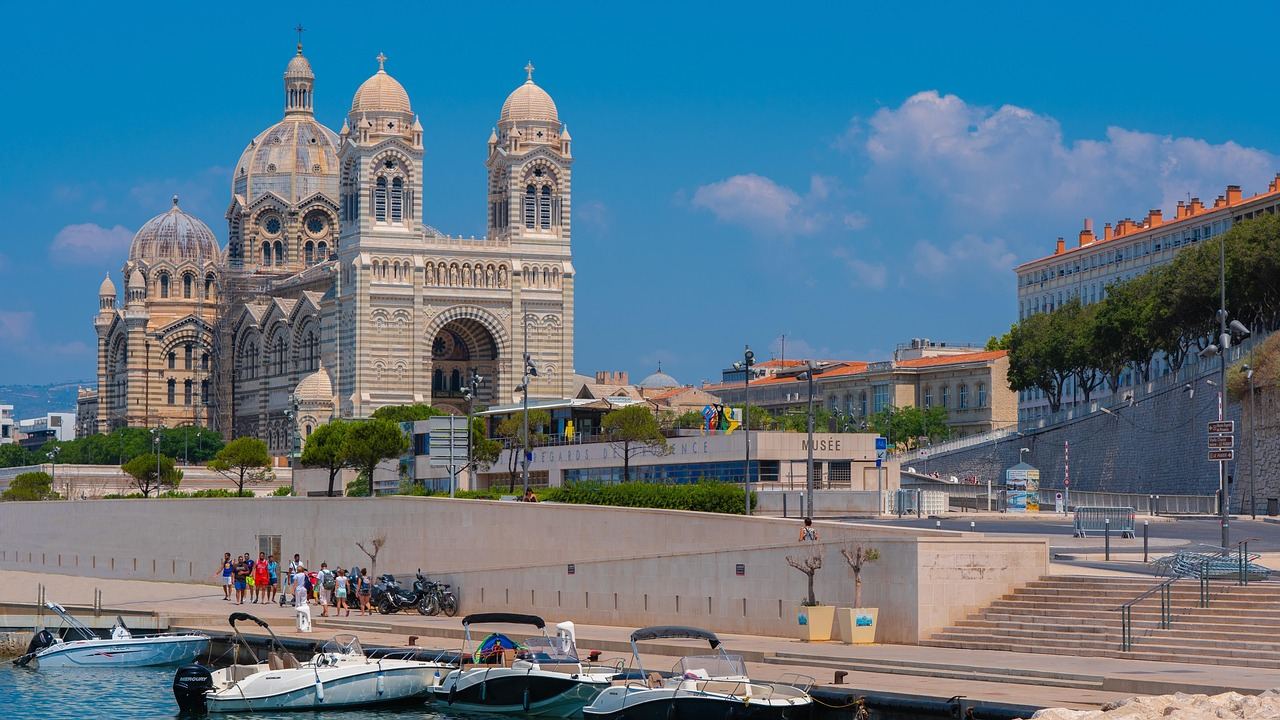
The Stanford Encyclopedia reports that after the German western offensive Weil left Paris with her family in June 1940, on the last train. The family settled in Marseille, which the entry calls the main gathering point for those trying to flee France, and where it says Weil worked with the Resistance. The Internet Encyclopedia of Philosophy describes her there as publishing essays and doing what she could for people, often Jews like herself, who were seeking escape from Vichy France and the Nazi threat. Her work in the south is covered on the page about simone weil in marseille.
The Stanford entry adds that in Vichy France Weil took up a practice she had long sought, which was to apprentice herself to the life of agricultural labourers. It also says that her friendship with Perrin led her to consider the question of baptism. Her religious position is described in different ways by different scholars, and the entry presents it as a matter she herself kept turning over rather than as a settled conclusion.
In Marseille she met the Dominican priest Joseph-Marie Perrin, who became a close friend and a spiritual interlocutor, and through him she met the Catholic writer Gustave Thibon. According to the same Stanford entry, in the fall of 1941 she worked in the grape harvest on Thibon’s farm in the Ardèche region. The entry adds that she was not treated like the other labourers and that she lodged and ate at her employers’ house. It also reports that she carried Plato’s Symposium into the vineyards.
The south of France in these years is also where much of her best-known writing was produced. The Stanford entry says her essay on the Iliad and force appeared in the December 1940 and January 1941 issues of Cahiers du Sud under the pseudonym Emile Novis, an anagram of her own name used to avoid antisemitic confrontation and censorship. It calls the essay the most widely read of her pieces during her lifetime.
The Internet Encyclopedia of Philosophy adds a further point about her papers. Around the time she left France, she entrusted her essays, notebooks and letters to Thibon, and with the help of Perrin selections of those writings later made her widely known in the English-speaking world.
According to the Stanford Encyclopedia, in 1942 Weil agreed to leave France, partly so that her parents would be somewhere safe, but mainly because she thought she might be more useful to the war effort from another country. She went to New York by way of Morocco. The entry says that New York felt far from the suffering of her native France, and that the Free French movement in London felt closer to a return. The page on simone weil free france follows that work in London and her last months in more detail.
The same Stanford entry says that in 1943 she was given a small office at 19 Hill Street in London and that she wrote there day and night for the next four months. It gives her output in that period as around 800 printed pages, and it says she resigned from the Free French movement in late July. It records that she died on Tuesday, 24 August 1943, and that three days later the coroner pronounced her death a suicide, attributing it to cardiac failure from self-starvation and tuberculosis.
Her death is described differently by different sources, and this guide reports the accounts without choosing between them. The Stanford entry says her biographers tell a more complex story, in which she knew that her fellow citizens in occupied territory lived on minimal food rations and insisted on the same for herself, which worsened her illness. The Internet Encyclopedia of Philosophy says she was weakened by inadequate nutrition and anguish and died of tuberculosis. Both entries place her burial in Ashford, in the English county of Kent.
Much of what she wrote in London concerned France itself. The Stanford entry describes The Need for Roots as her major work from the period and explains that it sets out an idea of rootedness in a community, a place and a cultural history as a basic need of the human soul. The reflection on a “new patriotism” based on compassion, which the entry attributes to that late work, is her answer to what she saw as the uprooting of her country.
How postwar France received her writing
Almost everything that made Weil famous appeared after her death. The Internet Encyclopedia of Philosophy counts her writings, now collected in 20 volumes, as the product of a mere 15 years of work, and says that most of what is widely known was published posthumously. Most of what appeared in her lifetime took the form of short essays for small political and literary journals.
The Stanford Encyclopedia says that Albert Camus published The Need for Roots with Gallimard in 1949, as the first of 11 volumes of Weil’s work that he would promote. The Internet Encyclopedia of Philosophy credits his discovery of her writing, while he was an editor at Gallimard, as the main reason a serious effort for a complete publication began, and it records that in 1951 he called her “the only great mind of our time.” It also says that in 1988 Gallimard completed the publication of her writings. The page on simone weil and camus looks at that editorial relationship in more detail.
Her reputation then spread beyond France. The Stanford entry notes that T. S. Eliot wrote the introduction to The Need for Roots and cites Weil as an inspiration, and it lists later poets, novelists and philosophers who have drawn on her work, including Iris Murdoch and Czeslaw Milosz. French editions therefore sit at the start of a much wider international readership.
The reception was not uniform. The Stanford entry notes that the French post-structuralists who followed her did not engage extensively with her thought, though her ideas travelled through writers of her own generation such as Maurice Blanchot, Georges Bataille and Emmanuel Levinas. It also says that her position as a woman philosopher drew attacks on her person rather than on her thought during her life. These are scholarly judgements and are best read as the entries’ own assessments.
The French intellectual world behind her work
Weil’s French story is also an intellectual one. She was trained in a tradition that read the Greeks closely, valued the essay and distrusted specialisation, and she wrote in the shadow of the political crises of the interwar period. The article on french philosophy in the 1930s describes that setting and the thinkers around her.
Her ideas are treated separately from her biography. Readers who want her concepts, such as attention, affliction and gravity and grace, can start with the central guide to simone weil philosophy, which explains how those terms connect. Readers who prefer to start from texts can use the guide to simone weil books, which describes what her major works contain and how to approach them.
For a quick geographical outline, her life in France moves through several places in order: Paris and its schools, the provincial towns where she taught, the Parisian factories, Marseille and the countryside of the south, and then exile. Each location corresponds to a page in this section, and together they show how place shaped the questions she asked.
Frequently asked questions
Where was Simone Weil born?
Show answer
The Stanford Encyclopedia of Philosophy says she was born in Paris into an assimilated, secular Jewish family and grew up in a cultured, comfortable French household.
Did Simone Weil work as a teacher in France?
Show answer
Yes. The encyclopedias describe her working as a teacher of philosophy in French lycées after her studies, and they describe her organising and teaching workers outside school as well. The sources summarise the exact years differently, so the dedicated page on her teaching years gives the detail.
Why did Simone Weil leave France?
Show answer
According to the Stanford entry, she agreed to leave in 1942 so that her parents would be safe and because she thought she could be more useful to the French war effort from another country.
Who published Simone Weil’s writings in France?
Show answer
Most of her work appeared after her death. The sources name Gallimard as the publisher and Albert Camus as the editor who promoted her work there, with Gustave Thibon and Joseph-Marie Perrin helping to bring early selections into print.