

Simone Weil early life in Paris, as the encyclopedias describe it, was cultured and comfortable: a doctor’s household, strong schools, Alain’s classroom and a place at the École Normale Supérieure.
It is part of the wider guide to simone weil in france, which follows her from Paris through the provinces, the factories and the war years.
A secular Jewish family in Paris
According to the Internet Encyclopedia of Philosophy, Weil was born in Paris as the second of two children of comfortably off, agnostic and secular Jewish parents. Her father was a medical doctor, and her brother André, who was 3 years older, would become one of the most renowned mathematicians of the twentieth century. The Stanford Encyclopedia of Philosophy describes the household as providing an assimilated, secular, bourgeois French childhood that was cultured and comfortable.
The same Stanford entry notes that André was a math prodigy, a founder of the Bourbaki group and a distinguished mathematician at the Institute for Advanced Study in Princeton. Growing up beside such a brother left a mark. The Internet Encyclopedia of Philosophy says that at 14 Weil had a personal crisis in the face of what she considered his far superior abilities.
Biographical accounts also describe a close family. The Wikipedia article on Weil says her parents were fairly affluent and raised their children in an attentive and supportive atmosphere, and that her brother was someone with whom she would always enjoy a close relationship. Because the article draws on many biographers, its details are best read as a summary of the secondary literature rather than as a primary record.
Early signs of moral seriousness
Several sources recall a child who was both precocious and unusually sensitive to other people’s hardship. The Internet Encyclopedia of Philosophy says that she was intellectually precocious and morally disconcerting from the start. As examples it mentions refusing at age 5 to accept a necklace as a present, on the ground that luxury is discriminatory, and the next year refusing to eat more sugar than the amount allotted to French troops as they fought the Germans.
Stories like these are told by her biographers and repeated in the encyclopedias, so they carry the usual caution that a famous person’s childhood is often recounted through later memory. What the sources agree on is the direction of her sympathies. The Stanford entry describes her as already sympathetic with the downtrodden and critical of French society by the time she studied with Alain.
The Wikipedia article adds that she was proficient in Ancient Greek by age 12, because she and her brother had taught themselves the language and used it to speak to each other. If accurate, that detail explains how comfortably she later moved between Plato and the Greek tragedians, whose place in her thought is covered elsewhere on this site.
- Andre 3 years older: 3 years
- Alain greatest philosophy teacher: Alain
- Le Senne first philosophy teacher: Le Senne
- Red Virgin nickname: nickname
- Categorical imperative in skirts: nickname
Schools before Henri-IV
She was educated at a number of schools and by private tutors, according to the Internet Encyclopedia of Philosophy. The Stanford entry identifies her first philosophy teacher as René Le Senne at the Lycée Victor-Duruy. It says that he introduced her to the thesis, which she would maintain, that contradiction is an obstacle to theory that generates nuanced, alert thinking.
The Stanford entry also says that in Alain’s class she began developing her distinct mode of philosophising through paradox and attention, in the form of the essay. Readers of her later writing on attention and on affliction will meet that approach again.
Lycée Henri-IV and the preparation for the Ecole Normale
The Stanford Encyclopedia says that beginning in October 1925 Weil studied at Henri IV Lycée, preparing for the entrance exams of the École Normale Supérieure. There she studied under Alain, the pen name of Émile-Auguste Chartier. The Internet Encyclopedia of Philosophy calls him the greatest philosophy teacher of the period.
The Stanford entry says his classes emphasised intellectual history, including Plato, Marcus Aurelius, Descartes, Spinoza and Kant in philosophy and Homer, Aeschylus, Sophocles and Euripides in literature. The relationship is large enough to deserve its own page, and the article on simone weil and alain covers it in detail.
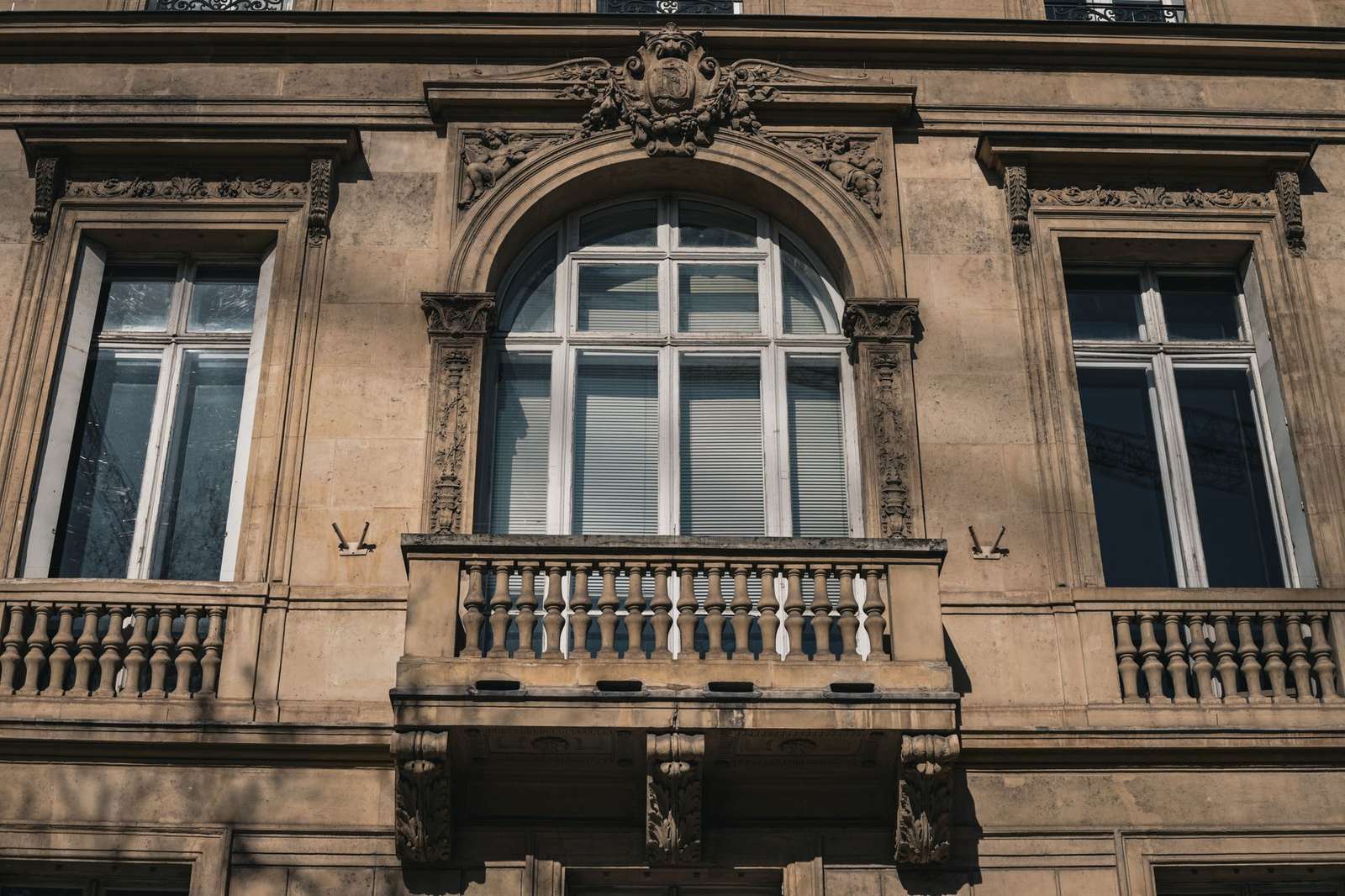
According to the Wikipedia article, she attracted much attention at the school with her radical opinions and actions, such as organising against the military draft. It records that she was called the “Red Virgin” and that classmates referred to her as the “categorical imperative in skirts.” Nicknames such as these come from biographical anecdote and show how she was perceived at the time more than they establish how she saw herself.
The École Normale Supérieure
The Internet Encyclopedia of Philosophy records that in 1928, at her second attempt, she gained admission to the École Normale Supérieure, beating Simone de Beauvoir into second place in the examination in general philosophy and logic. The Stanford Encyclopedia adds that she was the only woman in her class, the first woman having been first admitted in 1917.
The same Internet Encyclopedia entry quotes a famous exchange from Beauvoir’s memoirs, in which Beauvoir describes approaching Weil, who declared that only the revolution that would feed all the people on earth mattered. When Beauvoir answered that the problem was to find a meaning for existence, Weil, she says, replied, “It is easy to see you have never gone hungry.” The entry reads the exchange as showing how Weil put physical needs first, with spiritual needs alongside them.
The exchange is told from Beauvoir’s side, so it is evidence of Weil’s reputation among her peers as much as a record of her words.
Degree, dissertation and the agrégation
The Stanford Encyclopedia says that in 1929–1930 Weil worked on her dissertation on knowledge and perception in Descartes. It adds that after earning the agrégation diploma, the national qualification for teaching in French secondary schools, she began a career as a lycée teacher. The Internet Encyclopedia of Philosophy dates her degree and her civil service examination in 1931 and names her thesis as Science et perfection dans Descartes. The two encyclopedias summarise the dissertation differently, so the title is best read with the source that gives it.
Descartes remained an influence. The Stanford entry says that in her early thinking she prized the first-person perspective and radical skepticism of Descartes, together with the class-based solidarity of Marx and the moral absolutism and respect for the individual of Kant. These three strands, drawn from philosophers she met in Paris, were the foundation of her early political writing.
The world she then entered was not only a student’s. The article on french philosophy in the 1930s describes the thinkers, journals and quarrels that surrounded her in the years after she left the École Normale.
Frequently asked questions
When and where was Simone Weil born?
Show answer
The Stanford Encyclopedia of Philosophy says she was born in Paris on 3 February 1909 into an assimilated, secular Jewish family.
Who was Simone Weil’s brother?
Show answer
Her older brother, André Weil, became a distinguished mathematician and a founder of the Bourbaki group, according to the Stanford Encyclopedia.
Which school did Simone Weil attend before the École Normale?
Show answer
She studied at the Lycée Henri-IV, where she was taught by the philosopher Alain, after earlier schooling that included philosophy classes with René Le Senne.
Was Simone Weil the only woman at the École Normale?
Show answer
The Stanford entry says that she was the only woman in her class when she entered in 1928, the first woman having been admitted at the school in 1917.